About Triad Flow™

Enterprise delivery has a structural problem that no amount of process optimization will solve.

Triad Flow™ emerged from the shared observation that the structural problems limiting enterprise delivery require structural solutions — not better execution of existing frameworks, but a fundamentally different approach to organizing work.

The Triad

The authors

Written by practitioners who are also doctoral researchers — professionals who have led enterprise delivery while simultaneously studying why it fails. A combined forty years of enterprise technology leadership.

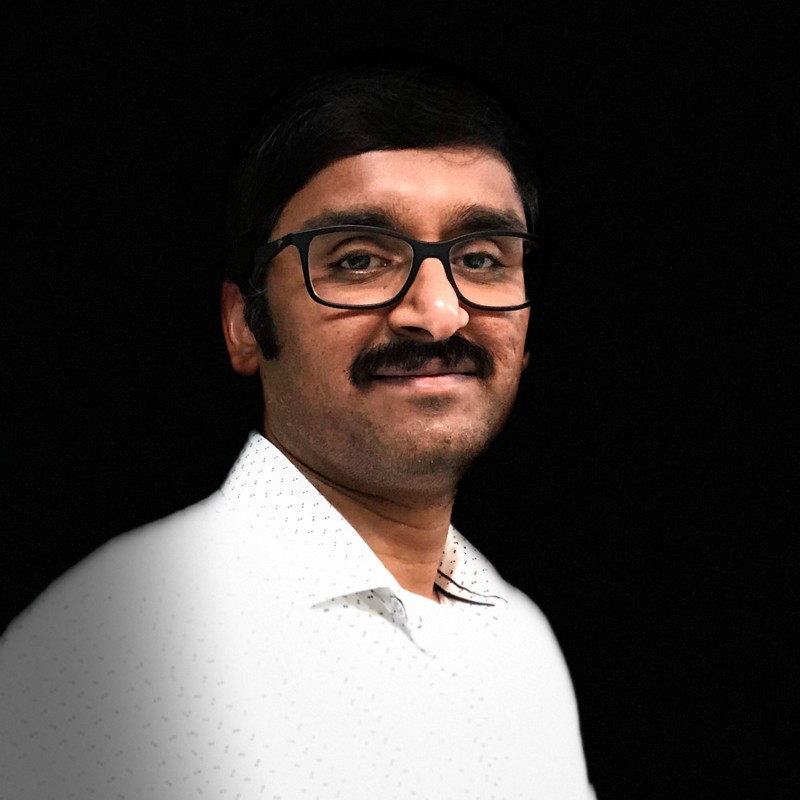
SN

Sabarish Sasidharan Nair

Senior Engineering Manager, Cox Automotive • PhD Candidate (IT), MIT ADT University

Over fifteen years of experience leading engineering teams and delivering enterprise-scale solutions. Career spans front-end development, software architecture, and engineering leadership across Apple, The Home Depot, Macy's, and Cox Automotive. Holds an MBA in Information Technology Management from Western Governors University. Founder of the Greater Austin Association of Asian Engineers. Based in Austin, Texas.

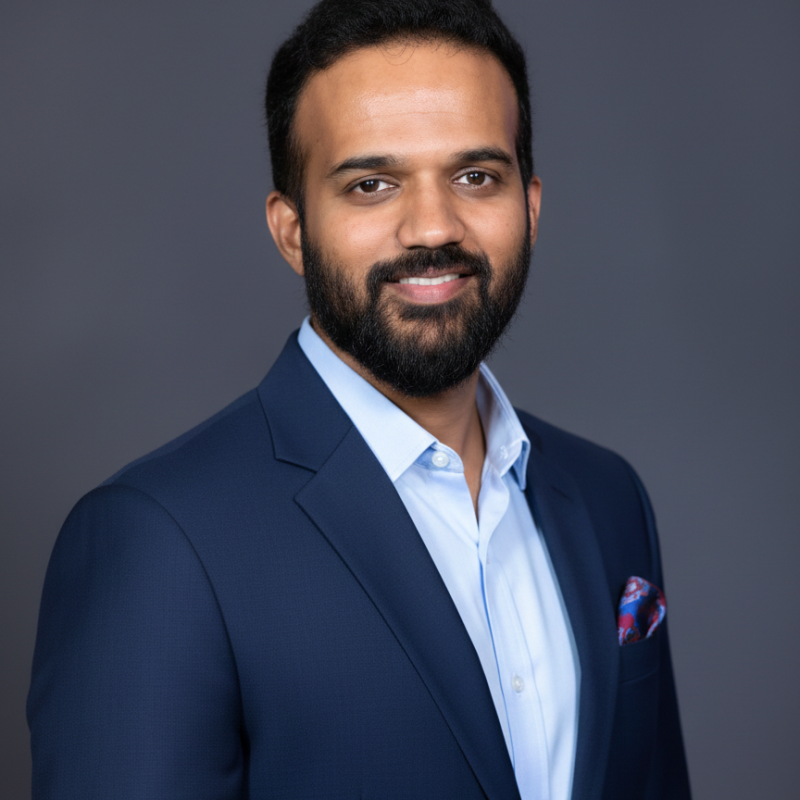
VT

Varun Thazhathekalathil

SAP Support Delivery Lead, Apple • DBA Candidate, California Southern University

Over eleven years of experience in SAP consulting, digital program delivery, and project management. Has managed enterprise implementations ranging from one to three million dollars across consumer electronics, retail, high-tech, and oil and gas industries. Career includes leadership roles at Illumina, Infosys, and IBM, supporting clients including Apple and Shell Oil Company. Holds an MBA from Bharathiar University. Expertise in business process analysis, change management, and analytics-driven decision-making.

SS

Sudheesh Sudhakaran

AWS Solution Architect & AI Specialist, Baxter International • PhD Candidate (IT), MIT ADT University

Over fifteen years of experience designing enterprise business solutions across pharmaceuticals, retail, and manufacturing. Expertise spans cloud computing, full-stack development, and enterprise application integration, with specialized knowledge in AWS architecture and JD Edwards implementations. Has managed projects ranging from small-scale initiatives to enterprise-level implementations coordinating cross-functional teams across multiple geographies. Holds a B.Tech in Computer Science from Kerala University. Based in the Chicago area.

The Thesis

What Triad Flow™ addresses

The problems facing enterprise technology organizations today are not the problems that dominant methodologies were designed to solve. They require a different set of assumptions about how work should be organized.

Coordination cost inversion

At enterprise scale, coordination cost routinely exceeds execution cost. Organizations pay more to align than to build. Triad Flow™ consolidates ownership to eliminate structural coordination overhead.

Fragmented decision authority

Decisions stall because many parties can delay progress but none can unilaterally enable it. The Execution Triad places complete decision authority at the point of execution.

Governance bottlenecks

Sequential gate-based governance creates queues that constrain delivery to reviewer capacity. Integrated governance embeds risk management within the execution unit through the Guardian.

The acceleration gap

Implementation speed has accelerated while organizational speed has not. The gap between what organizations can build and what they can deliver widens as acceleration continues.

Core Beliefs

What we believe

  • Enterprise delivery problems are structural, not operational — they require structural solutions
  • Ownership means authority plus accountability — the power to decide and the responsibility for what follows
  • Three decision domains are exhaustive: intent, implementation, and readiness
  • Flow cycles governed by readiness produce better outcomes than time-boxed sprints governed by calendars
  • Governance should enable execution, not control it — the default is permission within boundaries
  • Ceremonies are structural compensations — when structure is sound, there is less to compensate for
  • Measure flow and outcomes, not activity and velocity
  • Complexity is the enemy of flow — minimalism is discipline, not omission
  • The future belongs to organizations that can execute — everything else is commentary

Publisher

Published by Legacy Books

The Triad Flow™ concept, operating model, terminology, and original expression are the intellectual property of the authors. Public references to Triad Flow™ should include appropriate attribution.

Explore the framework

Read how the model works, or explore the book series for the complete treatment.

Read the Process View Publications